Monday, 13 July 2009

With A Child’s Heart (MJ song)

Walt pulled into the vast, bleak car park. A few cars were parked off to his left, within yards of the store, though Walt turned the other way, driving his pick-up through the desolate rows of empty spaces to the edge of the tarmac where it abruptly ended and the Albuquerque scrubland started. It wasn’t a particularly good view, merely a secluded one. He unzipped his backpack, took out the clear plastic tub, and carefully admired the contents, his thumb brushing the plastic as he’d imagine caressing a lover’s hipbone.

He sighed deeply, concentrating on his breathing. He exhaled his routine everyday thoughts, and inhaled the thoughts of playtime when he got home. His eyes, closed with the effort of concentration, crinkled at the corners as he smiled to himself, and peace came over him for a few, brief moments.

As his thoughts began to wander, he put the box back in the bag, turned the stereo on to a low volume, and skipped the CD forward three tracks to his favourite. He listened to the classical music, gently humming along, and managed another few seconds of quiet. Then, all too soon, it was time to go home.

He changed the music over to local radio, wanting to keep his special music for the moments when it was most effective, and carefully reversed out of the space, before slowly driving to the exit, obeying the road markings instead of cutting through the empty lot. On the road, he saw the same bland scrubland poking through in undeveloped areas, or anywhere abandoned for more than a few weeks, nature reclaiming anything that people weren’t making use of. He waited for a red light to change, knocked the air con down a notch, and leisurely drove home.

After pulling the pick-up onto the drive, Walt sat and played out the important bits of the evening to come in his head. Family stuff, dinner, then a couple of hours of peace, when Mom would watch her soaps and have a small drink, and he would be left alone. He ejected the CD and put it into the bag, then, making sure the lunchbox wasn’t going to be disturbed, zipped up his backpack and pulled it onto his shoulder. He climbed out, slammed the door shut as the hinges complained of old age with a loud creak, and headed inside.

“Hi Mom, what’s cooking?” He asked cheerfully, despite recognising the smell of burgers.

“Hi Walt, hope ya like burgers!”

Walt nodded and smiled, making sure Mom was happy that he was happy, and went to his room to shower and change.

As he closed the door, he heard Mom call “Dinner’s ready in five minutes, Walt”, and grunted an acknowledgement back, before heading into his small en-suite bathroom and flicking the shower on, leaving it to warm up as he unpacked the bags contents onto his bed.

After a brief shower, Walt checked himself in the mirror and sighed, unhappy with the sight. Turning away, he methodically tidied, ensuring everything was in its place, used clothes in the basket, towel hung to dry, bag and contents all tidied away, then went through for dinner.

“Coupla minutes, hun” said Mom as he walked through the open plan kitchen towards the TV room. After sitting in the lounge chair and pulling the handle that raised the footrest and moved the backrest, he picked up the remote and flicked through the channels, past the various news channels to the sports news. As he flicked past the news, he kept a keen eye on the headlines, though he didn’t stop or slow when the story he was looking for appeared briefly onscreen. He could check properly later.

**

He enjoyed his Mom’s burgers, although these days they were having them so often he was becoming a bit sick of them, especially with the cheap mince she was using nowadays, but he said nothing, wanting to make sure Mom was happy. It wasn’t her fault she couldn’t afford much else. Lay-off’s had been happening all over town, Mom was lucky she still had part time work. Walt helped where he could, but that merely kept a roof over their head, it didn’t extend to culinary choices.

Mom asked about his day, and he told her the gossip that the girls had been talking about at lunch, pretending he had joined in with the gossip with an occasional “so I said…”. It was better to tell a small white lie like that than to have Mom worry about him being sat in the corner on his own every lunch time. She worried too much as it was.

After dinner, with Mom satisfied that Walt had had a good day, he headed to his room and switched the computer on, before heading back out to get a coke. A quick glance told him Mom wouldn’t be moving any time soon. She was staring at the screen whilst slowly shaking her whiskey, toying with it as blue smoke rose from the ashtray, her first evening cigarette slowly burning itself down.

Back in his room, he sat at the pc and brought the news sites up from his favourites list. He read about the headline he’d noticed earlier on TV, and smiled to himself at the vagueness of the reports. They had no clue. He stood, walked to the bathroom and pulled a spare shower curtain from the cupboard under the sink. He lay the plastic sheeting out onto the bed, careful to cover the bed entirely, and formed a small depression near the middle. Excited now, he took a deep breath to compose himself, then carefully lifted the plastic box out of his backpack and set it at the centre of the depression. He held his breath, removed the lid and then took out the toy. Playtime was here.

Walt gently caressed the toy, feeling the softness, the suppleness, the pliability. He spent the next half an hour playing, testing, and playing some more, listening to his CD on repeat, all the while trying to keep the noise of the plastic sheet quiet. But then the paranoia started. A breeze outside startled him as it brushed a few leaves outside. He knew it was time to stop before he got caught or freaked out again.
He carefully put the toy back in the box and sealed it, then folded in the plastic sheeting, before carrying everything through to the en-suite. After washing himself clean, he checked on Mom again, who was sat in the same place, with the same drink, and the same line of blue smoke. The only change was the number of cigarette butts crushed into the glass ashtray.

“Warm tonight, isn’t it?” he mentioned as he got another coke from the fridge. “Mmmm” came the reply. She didn’t look up from the TV.

Back in his room, Walt cleared up everything dutifully, tidied and smoothed the bed, packaged the rubbish in several layers of bin liner and masking tape, then packed up his backpack for the following day. He waited, and listened for the end of Mom’s soap, and headed out with his drink to sit in the lounge. Mom put the news channel on for him like always.

He watched and waited for the story to appear, then sighed and said “can you believe that?” Mom was silent for a moment; then “That’s too much, Walt. You should turn yourself in.” – her eyes never moved from the screen.

“No!” snarled Walt, “they’ll never know – I did it clean. And got enough for a few burgers, too”

“But that’s a child, Walt. People notice children”

“I know, I’m sorry. I shouldn’t have. But I just needed that one bit. Just the one. And I got it Mom, I got it. And like I told you, I did it clean.”

“How clean?”

“Perfec’ Mom, perfect”

“You best hope so” - She turned to look him in the eye.

He stared her down, and said “I’ll show you, come with me.”

**

Walt drove with local radio on, to fill the silence. He turned into the vast, bleak car park, headed away from the store, the car park now completely empty, Walt still obeyed the road markings. He stopped near the edge of the tarmac, as he had earlier in the day, and carefully parked in the same space. He flicked the headlamps off, and the unimposing scrubland suddenly became menacing and threatening as the shadows reached the window.

They sat in silence for a moment.

“Well?” said Mom
“She’s here”

“Where?”

“Right here, Mom”

“What d’you mean, Walt?”

“She’s right here. We’re parked 12 feet above her. Good view, ain’t it?”

Sunday, 28 June 2009

Feeding The Press (Politics)

Gerald Barford, longstanding Conservative, left the London members club and poured himself into a waiting taxi. Evening drinks had been pleasant, although he was glad to be getting back to his Westminster apartment. He checked his watch. 3:12am. He sighed, knowing he was due back in the house at just after 11am. Another long day.

He knew he’d make a good MP, he just needed a way in. That “way in” had been presented to him over the past few weeks; late night gossip slowly causing a plan to form. It was well accepted that many of the Members “enjoyed the company” of their assistants and secretaries when they were away from the wife, although he was always loyal to his wife, and always tried his hardest to do right for the people, at the expense of his family time, even at the expense of his health.

When he got back to his flat, he sat at his desk, writing up details of the MP’s various trysts, and the supporting evidence he had garnered from his boys club meetings, then eventually stumbled to bed as dawn approached.

**

The next morning, he woke late, poured himself a small gin to ease his head, and telephoned his contact at the horrible red –top newspaper. The journalist, Jim Accrington, had been waiting for this information for a while, and Gerry had finally delivered. The press embargo was set at a week to give Gerry time to sort out his affairs and cover his tracks, and everything was set.

**

One week later, the story ran. Jim sat at his desk, admiring the headline:

OUR MP’S SORDID AFFAIRS

He liked the dual meaning, their general affairs and their intimate affairs. The headline filled news stands, the copy fleshing out the sordid details. TV news bulletins soon followed with the same tearful wives either defending or lambasting their husbands, depending on how well they knew the political game of happy families. Gerry had only given details of eight MP’s, including two from his own party to help cover his tracks, but once those names came out, more people rang the papers, and soon there were more than forty member’s names sullied by undeniable allegations, as more underlings saw political capital in removing their bosses from power, and hasty reshuffles were made.

**

Over a month had passed, and the papers had run amok through the reputation of the political classes. MP’s affair’s had been the hook to get the public interest, then other revelations had come out about expenses claims made for costs incurred whilst wining and dining “clients”, assistants writing reports instead of the MP’s themselves, whilst the honourable member’s were holed up in hotel rooms, each revelation causing a fresh wave of controversy, and a fresh round of increased newspaper circulation.

The newspapers were now widening their net, looking for “Integrity” in their MP’s. Important issues for the nation, international issues, law changes, upcoming local elections, everything was put on hold as independent inquiries were held, backs were covered, hurried and embarrassing interviews were given and MP’s ran around with far more gusto than they had ever shown whilst attempting to run the country. Newspapers covered and recovered the story, always looking for new angles, for new revelations, for more sales.

**

Eventually, the newspapers drive for “integrity” altered the public opinion and forced a general election. MP’s lives had always been in the public eye, but due to new regulations, now almost everything they did, every minute of their day, every penny that they spent, was collated, checked and double checked to ensure nothing untoward was going on. The costs were great, and the “honourable” name of the members of parliament was no more.

Gerald Barford gained a seat at the election, having been one of the few MP’s completely left out of the previous revelations, and he took on his role with gusto, ensuring, as he always had done, that everything he did was in the public interest, and that all his staff were equally as untouchable. He wanted to bring the title of MP back to honourable levels.

In public, he quietly accepted the new regulatory regime, but in private he was overjoyed, being one of the few MP’s who was more than happy to have his affairs checked thoroughly. His innocent, hard working nature was finally being appreciated. He was being begrudgingly tipped for big things in the future by his colleagues.

After the election, the saga drew to a close, and newspaper circulations began to drop back down again, the stories exhausted, as celebrity arguments, divorces and near-topless photos could no longer draw the same readership as the leaders of the country. Profits fell and Newspaper editors looked for the new big story. A recently promoted Jim Accrington was enjoying boozy expensive lunches, had signed a publishing deal for a book about the biggest story he’d ever broke, and had one of the highest profiles on Fleet Street.

Unfortunately for Jim, the other journalists at his and other papers were beginning to resent the lack of stories he had brought in ever since “the big one”. Rumours were beginning to spread that he was a one-trick pony, which pricked his now inflated ego, and he searched his memory for another big story.

Months passed, his colleagues resentment grew, and the cache he had built up within journalism was fading, causing sleepless nights and writer’s block. His first book had been given a warm reception, but not warm enough. He had been coasting and he knew it.

The final straw came when he first heard about one Gerald Barford being tipped for Prime Minister in the near future. He knew he could get his reputation back, but this time he would have to capitalise on the opportunity. He made some calls, hunched over his word processor, and submitted the story. Next day, he sat back and admired his latest headline:

EXCLUSIVE!!
ANOTHER UNTRUSTWORTHY MP UNCOVERED!!
GERALD BARFORD: GRASS!!

The Administrator (Sci-fi)

He looked out over the city, this waste-spewing monster containing almost a billion souls, all trying to get by, get rich, to find their cash cow and milk it to death before anyone else discovered it and waded in to steal it away. Those who made their cash moved away from the beast of a conurbation, this enormous mole on the landscape that lit up at night and stank on warm days, infected with virulent strains of human running around inside, spreading distaste and sickness to each other, and their surroundings.

The moneyed people moved as far away as they could get from this place, flitting from one holiday planet to another, talking to other people who’d made their money, working out how to make even more money. Everyone who had stayed at home was merely an administrator, a keyboard-warrior, doing the paperwork for all those bright stars out there finding new sources of this, that or the other, new sources of money.
He mulled over the insistent thought that he’d never make a name for himself back here. This was a Government job, he’d never make money. He wasn’t one in a million; he was one of a million. The colonies were the places that big money could be made, the new-technologists and the scientists, the thieves and the corporate thieves, the bandits, the explorers, the horticulturists, he could go on all day. Basically anyone with money, who wanted more money.

He sipped at his drink and took a bite from the energy bar. It wasn’t exactly gastronomy, but they were free, and it was quite possible to survive just on the free food available at work. People needed money to test their taste buds on something a little more adventurous. Many never knew the delights on offer. Lack of money, you see.

The console blinked with unanswered messages from friends, each with their own code, inviting him to illicit parties with upper’s, downer’s, even alcohol. The gatherings were coded as work orders, the barely interested mail checkers would always just pass them through, and that was assuming the programs registered them in the first place. It was just another room full of administrators, administrating, while the real money moved further away, at the fringes of society.

His eight minute break was over. Eight minutes, every hour, his free time fractured into units so small you couldn’t even have a proper conversation. It stopped the overuse headaches from the screens, but at the cost of human conversation. “A happy balance” was how it was described at the time, and everyone WAS happy with it when it was first announced. The management had listened and had responded swiftly.

Productivity went up almost 3.85% and the administrator’s were smiling. It was a good situation for everyone. But as time went on, the workers slowly realised how little they would see of each other, how little chance they would get to talk. The 8 minute breaks were just enough time to refresh, recuperate, use the bathroom, and then it was back to the console. After a few months, no-one spoke to anyone. Everyone developed their own ways of passing their eight minutes, and the management liked to move the breaks around, so even if you did venture out of your area during your eight minutes, and even if you did meet someone else out there, you rarely knew who they were or, more importantly, if they were trustworthy.

He looked through his console messages. Two of them he declined as he didn’t know what code he was supposed to be reading, and so refused the “work orders” in a way that asked “what’s going on?” The others he considered, wondering if anyone from a ship would be there, if there was anyone he could give money to, so he could get off this rock and go make some real money. He knew there was a cafĂ© near the docking stations that would have plenty of guys who’d take his money, but they weren’t to be trusted. Too many people had been put into storage cases and never been heard from again.

Whilst working, he sorted out his social appointments for the next couple of nights, and then sent a few messages on to others, continuing the spread of coded messages about a brittle social scene that the city both denied and supported in equal measure. Denied by the officials in their robes, supported by the administrators in their comfortable uniforms.

Over the next few hours, he worked efficiently and quietly, ensuring no errors and no reason to be suspected of anything, taking his eight minute breaks as and when indicated by the console. Occasionally he opened up a small program to check the time, smiling as he watched the antiquated second hand tick round the circle on the console, giving him delight in both its inherent beauty and its illegality.

He rode the escalator back to his apartment, stood with his eyes closed, enjoying the air moving across his face. He cleaned and changed, then put a long coat over the top, and looked in the mirror to ensure nothing was visible from the outside. He scurried across town on foot, blending with the crowd , always getting closer to the party, closer to the ship away from here, closer to the money.

War Can Wait (50+ years ago)

“Sam!” I shouted over the noise, “we need to get to over there”, whilst nodding to my left, towards the trench we should have been in, instead of the thigh deep drainage channel we’d mistaken it for.

“Sam?”

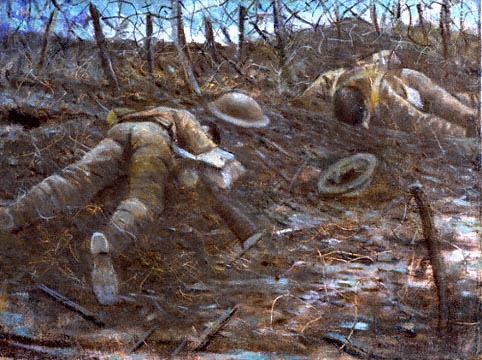
I ducked down and turned round. Sam was looking up into the sky, his eyes lifeless, his neck and chest a deep crimson colour. He was gone. I stared at him. A million thoughts and feelings passed my eyes, then an explosion somewhere nearby rained mud down around me.

I turned away, swallowed all my feelings bar the rage, reloaded and stuck my head up over the edge, further than I should have, fuelled by a hot white anger that interfered with me and caused me to scream as I shot. The magazine was gone in a couple of seconds.

Duck down, reload, breathe. Back up again. There was no-one out in the open to shoot at, so I shot in the direction of the trees where they seemed to be coming from, then took a couple of pot shots at the tank, before thinking better of it and ducking again, adrenalin shaking my arms. I glanced over at Sam and smiled.

The explosions kept coming, the closer ones shaking my skull, making my teeth chatter and my brain bounce. Sam and I were split from the others. The tank I’d stupidly shot at was about 100 yards ahead of me, picking its way around the craters, trying to flank our line. It was firing off to my left, where the guys were holed up. I saw a few troops come sneaking around to my side of the tank. My senses had returned and I resisted the urge to shoot straightaway. I smiled.

60 yards and closing. I took a step down, reached behind me and pulled the two grenades from Sam’s chest, then grabbed a magazine. I waited a few seconds for the tank to close, all the while examining the now-rumbling mud, then unpinned a grenade and threw it at the front corner, then unpinned the other and threw it at the rear corner. I had one grenade left myself and there were no other bodies around to take from.

As I threw the second, the first exploded, taking three men out, and causing the other 3 to hit the deck. Then the second grenade went off, taking another out. Two left, and they were confused as shit. I smiled as I eyed them through the sights. They were like scared little boys, looking round for the source of the grenades, grimacing with wide eyes. I gently squeezed the trigger, a head snapped back, and then fell forward.

The other immediately disappeared round the back of the tank.He knew where the bullet had come from. Maybe he saw the flash? The tank was 20 yards away now, and the front gunner was turning the machine gun turret towards me and sprayed ammo all around me. I got low and stayed hidden. Sam took some for me.

A couple of seconds after the last burst, I chanced a look – the tank was almost level with us now, the front gun now concentrating on the second wave, about 50 yards behind us. The main gun was firing along the line, away from me. I waited for it to pass, for the last one to reappear. So I could see his face when I got him. But he didn’t appear.

I poked my head up further, heard bullets whistling over my head and immediately dropped. “Wanker! You’ve given your position away now” I thought, then thought about whether to try and cross the open country between me and the others. I slumped down into the trench, unsure what to do, frozen by indecision. I waited, whispering to myself, to Sam, just to hear my own thoughts out loud.

I could still feel the tank moving, the earth rumbling. Artillery had stopped for now as the tank had broken our lines. I heard a shout; ”sticky bomb!”; and buried my chin into my chest, smiling, knowing the fiery fate that awaited the Tank crew, if they didn’t climb out and get shot first.

As soon as the second sticky bomb exploded, I started up the edge of the muddy ditch, and crawled. The artillery returned, a huge boom deafening me – I stopped while mud rained over the area again. I was getting closer to the trench, and caught a faint whiff of tobacco as I crawled. I could see the fresh tank tracks in the mud, several inches deep. I rolled into one, facing the enemy to my right and fired off a couple of shots, more for my own satisfaction than anything else.

I heard someone shout “covering fire!” from my right and immediately froze. They were off to my left, weren’t they? Was I heading away from the company? I heard a few small thuds ahead of me, the ground spitting mud at me, as the enemy lines sought me out. As I listened, frozen, I realised the voices were coming from my left. The last explosion had deafened my left ear so I could only hear from my right ear. I now knew what Foster was talking about when he’d kept going on about “The Fog of War”. I got up and ran left to our trench, before I could confuse myself again, and almost immediately fell face-first into a large crater.

I pulled myself out the mud. One of the kids, a country lad, Shaw, was there. He was staring into space, like how I’d left Sam, except he wasn’t dead. He was sat, straddling the guy from behind the tank.

Shaw’s knuckles were white as he held onto that throat with all his might, despite him being long dead. I gently loosened his hands, and then pulled his head to my chest while he sobbed. War could wait.